Tracking the information about your manuscript
Communicate with the editorial office
Query manuscript payment status Edit officeCollecting, editing, reviewing and other affairs offices
Managing manuscripts
Managing author information and external review Expert Information Expert officeOnline Review
Online Communication with the Editorial Department
Page Views
Journal Overview

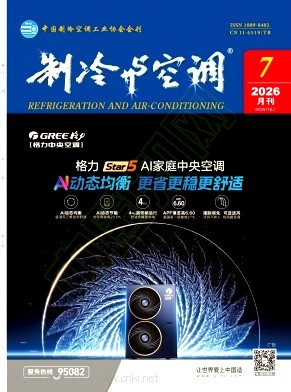
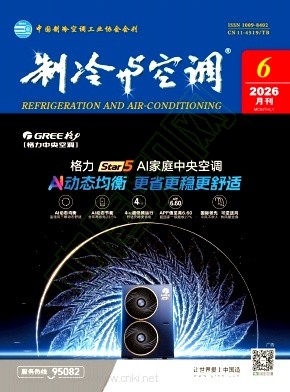
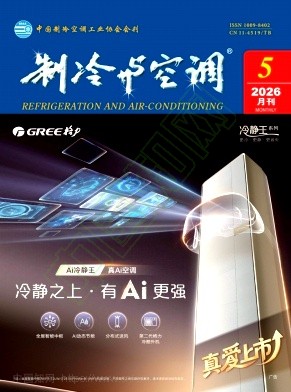
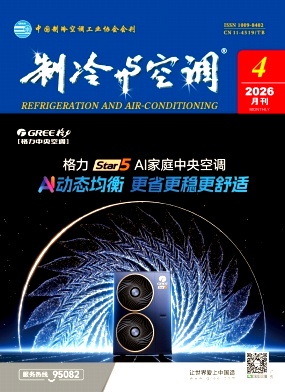
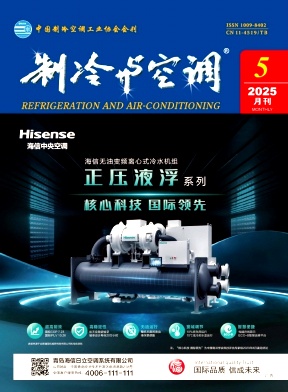
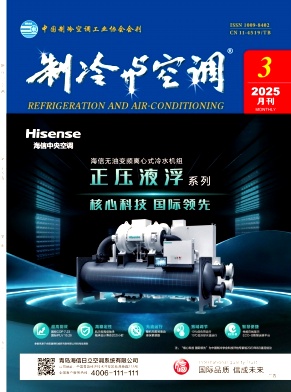
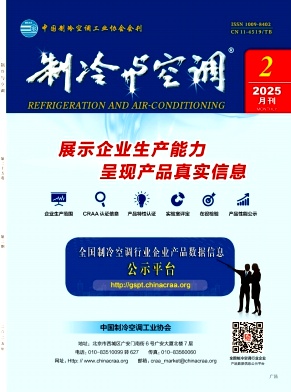
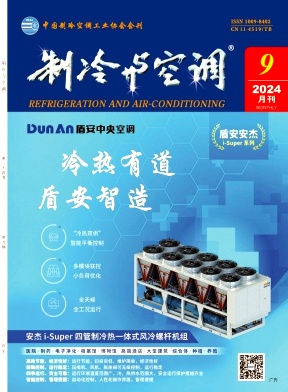
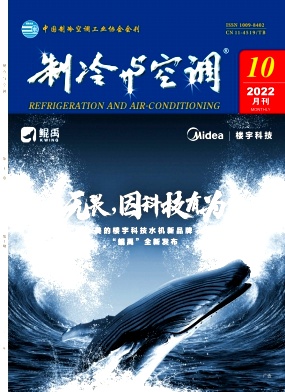
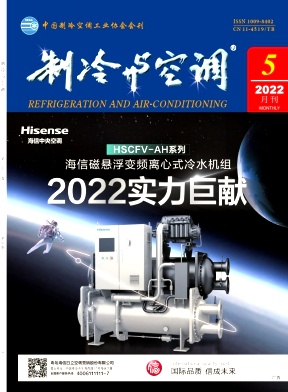
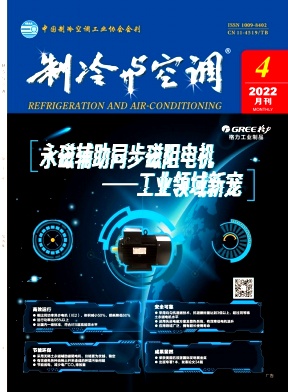
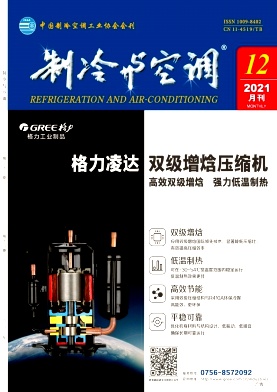
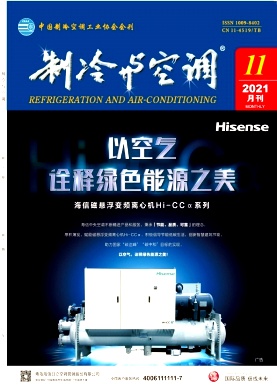
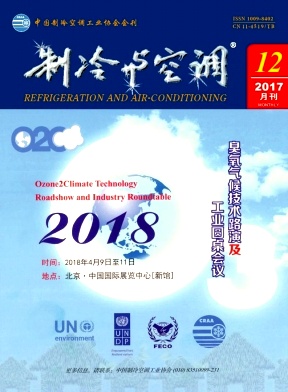
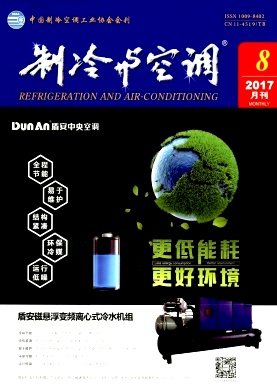
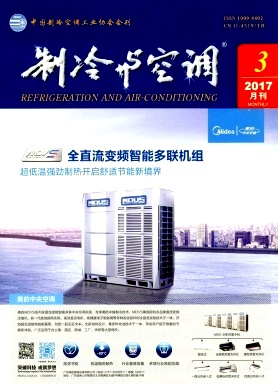
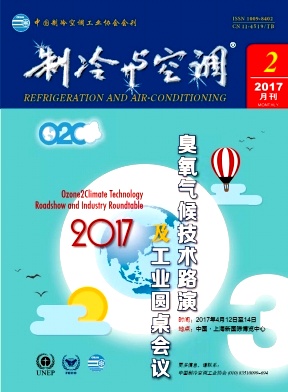
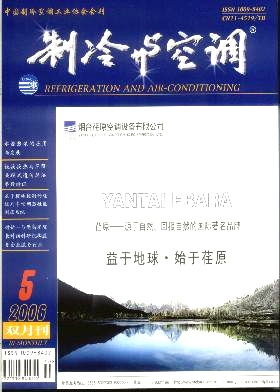
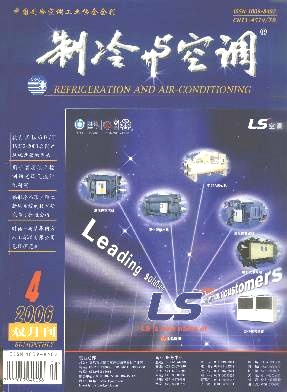
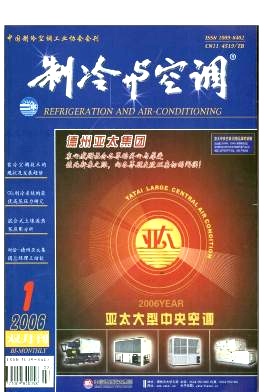
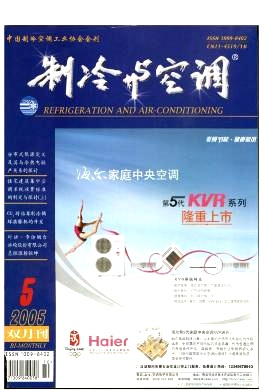
REFRIGERATION AND AIR-CONDITIONING
Launched in 1990, Monthly
Indexed by:
China Academic Journal Comprehensive Evaluation Database
China Journal Full-text
Database:
Chinese Core Journal (Select) Database
Chinese Science and Technology Journal Database
Annual Report for Chinese Academic Journals Impact Factors
Telephone: 010-83560065,83510099
Domestic Unified Serial Number (CN):11-4519/TB
International Standard Serial Number (ISSN):1009-8402
Study on the ESGWP evaluation model based on the coupling of dynamic refrigerant material flow and energy efficiency within system boundaries
Han Xiaohong;Zhou Xuan;Wang Haoran;Li Jiang;Liu Xiaohong;Wu Liping;Jiang Ning;Yan Yuhao;Lu Yongjie;Xie Baogang;Zhou Kun;In response to the current situation where the environmental impact assessment of refrigerants overly relies on a single global warming potential value(GWP) while neglecting the dynamic material circulation of refrigerants throughout the system's life cycle and the coupling of system energy efficiency, this study has established an equivalent system GWP(ESGWP) environmental impact assessment model. This model takes into account multiple key parameters such as system operation energy efficiency, initial refrigerant charge, equipment lifespan, full-process leakage rate, maintenance replenishment amount, and regional grid carbon emission factors, and introduces a carbon emission offset mechanism for recycled refrigerants. This enables a quantitative assessment of the carbon emission environmental impact during the actual application of refrigerants. Case analysis shows that indirect emissions caused by equipment operation energy consumption are the main source of the system's comprehensive environmental impact throughout its life cyc-le. By improving operation energy efficiency, reducing refrigerant charge through compact design, strengthening full-process leakage control, and increasing end-of-life recovery and reutilization of recycled refrigerants, significant emission reduction can be achieved for the system. The study confirms that some low GWP substitution schemes are prone to performance compensation due to property differences, resulting in their environmental load during the system's life cycle being higher than that of the original traditional refrigerant system. Therefore, merely pursuing extremely low GWP substitution schemes is not necessarily the optimal environmental path. The assessment of refrigerant's environmental footprint should be combined with specific application scenarios. The evaluation model proposed in this study overcomes the limitations of traditional assessment methods and can provide a more comprehensive evaluation perspective for the scientific selection of low-carbon technical paths and policy formulation in the industry.
Research on seasonal performance evaluation methods for heat recovery variable refrigerant flow systems
Yang Zixu;Xie Baogang;Zhang Yusheng;Zhang Yiwen;Li Ziye;Wei Junqing;Su Lin;Shi Wenxing;Scientific evaluation of the annual operating performance of heat recovery multi-split air conditioning systems is an important approach to promoting energy conservation, carbon reduction, and green development in the construction industry. Existing heat recovery mode efficiency ratios are based on single-point evaluations, and there is an urgent need to propose a seasonal performance evaluation method that aligns with the characteristics of their use in China. Based on the performance evaluation requirements for refrigeration and heat pump air conditioners, this study designs building load curves, operating hour distributions, and performance models for heat recovery multi-split systems through theoretical and simulation analysis. For the evaluation of efficiency during the heat recovery period, this paper introduces the Seasonal Heat Recovery Efficiency(SHRE) as an independent metric and further designs an Heat Recovery Annual performance Factor(HRAPF) suitable for cooling, heating, and heat recovery modes. The evaluation method proposed in this study provides a scientific reference for the performance analysis of relevant products and offers theoretical support for the development and application of industry standards.
Interpretation on core technicals of GB/T 32151.X Requirements of the greenhouse gas emissions accounting and reporting—Part X:Refrigeration and air-conditioning equipment production enterprise
Hu Yiqing;Ma Jinping;Yan Dong;Yu Xiaolin;To address industry pain points such as the lack of unified standards, non-standard methods and incomparable data in greenhouse gas(GHG) accounting for refrigeration and air-conditioning equipment manufacturers, China has formulated the national standard GB/T 32151.X Requirements of the greenhouse gas emissions accounting and reporting—Part X:Refrigeration and air-conditioning equipment production enterprise. This paper comprehen-sively interprets the core technical content of the standard from four key dimensions: accounting boundary, emission composition, activity data and emission factor. It clarifies the scope definition, calculation method, data management and factor selection requirements for corporate carbon emission accounting, and puts forward suggestions for implementa-tion. The implementation of the standard will promote the standardization of carbon emission accounting, systematization of emission reduction and precision of supervision in the industry, providing important technical support for the green and low-carbon development of the refrigeration and air-conditioning industry and the achievement of the Dual Carbon goals.
Research on the development trends of energy efficiency standards for room air conditioners
Wang Longyan;Cao Haomin;Ding Guoliang;Ding Yi;Cheng Jianhong;As a major contributor to building energy consumption, the scientific vali-dity and accuracy of energy efficiency evaluation methods for room air conditioners significantly influence energy conservation and emission reduction. With the advancement of air conditioner technologies toward intelligence, low carbon emissions, and grid-interactive, the limitations of current energy efficiency evaluation standards are increasingly evident, necessitating revision. This article reviews three key development trends in room air conditioner energy efficiency standards: load-based dynamic energy efficiency testing methods, comprehensive evaluation of energy efficiency and carbon emissions, and assessment of smart grid response capabilities. Studies indicate that the virtual building load method has become the mainstream solution for dynamic energy efficiency testing. The load model and test conditions have been basically determined, but it is still necessary to verify the test consistency and to establish the conversion relationship of energy efficiency indicators. The comprehensive evaluation of energy efficiency and carbon emissions for air conditioners can be achieved by adding carbon emission limits or developing a comprehensive energy efficiency index modified by GWP. Smart grid evaluation requires air conditioners to possess demand response capabilities, which can be assessed through aspects such as power outage memory functions, demand response performance, and user comfort maintenance. Related test methodologies, interface standardization, and the balance between energy efficiency and response performance still require further research.
Interpretation of the standard for Heat pump steam generation packages using vapor compression cycle
Mei Shengong;Wu Di;Hu Bin;Wang Ruzhu;The standard for Heat pump steam generation packages using vapor compression cycle has been established in response to the rapid advancement of industrial heating electrification and the growing demand for high-efficiency waste heat utilization. The standard systematically defines unit configurations, fundamental parameters, technical requirements, test methods, and inspection protocols, providing a scientific basis for technological standardization and market regulation. This paper presents a concise interpretation of the standard, encompassing its scope, product classification, nominal operating conditions, key performance parameters, energy efficiency requirements, and corresponding testing. Emphasis is placed on the classification framework, core performance indicators such as the coefficient of performance and specific electricity consumption per unit steam output, as well as the testing methodologies for evaporative and flash steam genera-tion pathways. The analysis aims to support accurate understanding and effective implemen-tation of the standard, and to facilitate the large-scale application of heat pump-based steam generation technologies in energy conservation and carbon emission reduction.